


Pot oamenii contracta boli din cauza căzilor de baie cu masaj spa?
2026-05-20 15:30jacuzzi
și transmiterea bolilor?
O perspectivă mai științifică se concentrează pe următoarele aspecte:
• Sunt condițiile de utilizare rezonabile și adecvate?
• Sunt implementate eficient protocoalele de gestionare a igienei?
• Posedă utilizatorul cunoștințe de bază despre echipament?
Scopul fundamental din spatele proiectării căzilor de baie cu masaj este de a îmbunătăți experiența utilizatorului, nu de a crea riscuri. Atribuirea problemelor de sănătate exclusiv echipamentului în sine - ignorând factorii cruciali de utilizare și întreținere - constituie o înțelegere unilaterală și incompletă a problemei.
•A water circulation system
•Multiple massage jets
•An internal structure comprising pumps and piping
•Temperature control and operational components
These structural elements enable the massage functionality of the bathtub, but they also result in a significantly more complex internal design.
Does Structural Complexity Imply Higher Risk?
Structural complexity does not inherently equate to danger; however, it does entail more rigorous requirements for management and maintenance. If a spa massage bathtub is not cleaned and managed properly, its internal environment can indeed become a breeding ground for microorganisms—and this is precisely the root cause of public concern.
Can Spa Massage Bathtubs Truly Become Breeding Grounds for Pathogens?
What Are the Characteristics of the Water Environment in a Spa Massage Bathtub?
Spa massage bathtubs typically exhibit the following water environment characteristics:
•Relatively high water temperatures
•Continuous water circulation
•Potentially prolonged periods of use
These characteristics, in and of themselves, do not directly cause disease; however, under specific conditions, they can compromise the hygienic integrity of the water.
Why Do the Factors of "Warm Water + Circulation" Spark Concern?
In the public consciousness, warm and humid environments are often perceived as being more conducive to microbial growth.
A spa massage bathtub is, by definition, a system that maintains a state of warm water over extended periods and contains an internal network of pipes and jets; consequently, people naturally tend to associate it with potential hygiene-related issues.
Can People Contract Diseases from Spa Massage Bathtubs?
Is this an "Inevitable Risk" or a "Conditional Risk"?
From a professional standpoint, the spa jacuzzi bathtub itself does not inherently lead to disease transmission.
The true focus of concern should be: under what specific conditions might risks arise?
In other words, the crux of the issue lies not in "whether or not to use a spa jacuzzi bathtub," but rather in:
•The management status of the spa jacuzzi bathtub;
•Whether cleaning and disinfection procedures are adequate;
•Whether the operating environment is appropriate.
Why can we not simply equate disease with the spa jacuzzi bathtub?
It is unscientific to conclude that a spa jacuzzi bathtub inevitably poses a health risk simply because it features a water circulation system. Any equipment involving water bodies requires proper management during use; it should not be subjected to simplistic stereotyping.
What factors are typically associated with potential hygiene issues in spa jacuzzi bathtubs?
Is water quality management a core factor?
Yes.
In the hygiene management of spa massage bathtubs, water quality consistently ranks as one of the most critical factors. If the water remains stagnant or untreated for extended periods, the associated health risks will naturally increase.
Are the internal pipelines easily overlooked?
The piping system of a spa massage bathtub is typically concealed within the outer casing, invisible to the naked eye; this often leads some users to neglect its cleaning requirements. In reality, however, the pipelines and jets are integral parts of the water-contact zone and must be included within the scope of comprehensive hygiene management.
Do the jets and circulation system increase the likelihood of infection?
Are the jets merely "water outlets"?
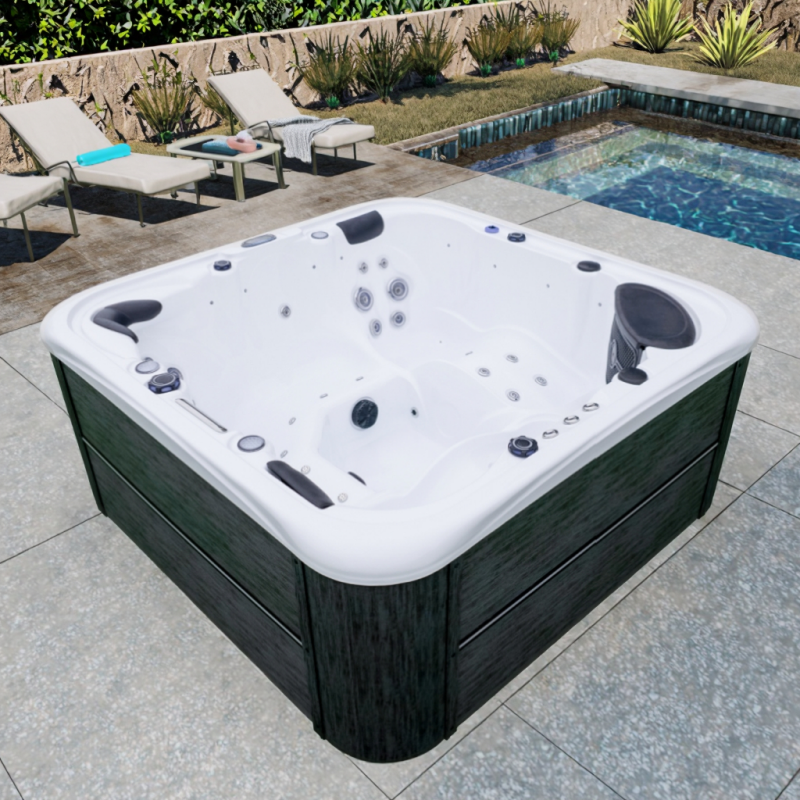
Functionally, the jets are essential components that enable the spa massage bathtub to deliver its therapeutic massage effects; from a hygiene perspective, however, they are also specific points through which the water flows repeatedly.
If the jets and pipelines are left uncleaned for prolonged periods, the overall hygienic condition of the unit may indeed be compromised.
What does the presence of a circulation system imply?
The primary purpose of the circulation system is to enhance the user experience of the spa jacuzzi bathtub, not to introduce additional risks.
The critical factor is this: does the circulation system operate within a framework that ensures cleanliness and proper control?
Is the risk of infection identical for all spa jacuzzi bathtubs?
Do different operating environments result in varying risks?
Yes.
Depending on the specific operating environment, the hygiene management requirements—as well as the potential risks—associated with a spa jacuzzi bathtub can vary significantly. Factors such as:
•Usage frequency;
•Water replacement cycles;
•The number of users;
all play a role in determining the overall hygienic status of the spa jacuzzi bathtub.
Should the hygiene priorities for home use differ from those for high-frequency, commercial settings?
While the specific points of concern may not be entirely identical, the core logic remains the same:
Does one engage in the reasonable and consistent cleaning and maintenance of the spa jacuzzi bathtub?
Why do some people feel apprehensive after using a spa massage bathtub?
Does this apprehension stem from an information asymmetry?
To a large extent, yes.
Many people are unfamiliar with the internal structure and operational mechanisms of spa massage bathtubs; consequently, when they encounter concepts such as "recirculating water," "piping," or "jets," they are prone to associating them with potential hygiene hazards.
Does a lack of understanding tend to amplify the perception of risk?
Yes.
Without an understanding of the design principles behind spa massage bathtubs, people often rely on intuition to assess risk, thereby overlooking the critical importance of proper usage and maintenance practices.
What determines the hygiene and safety of a spa massage bathtub?
Is the equipment itself important, but the manner of its use even more so?
That is a valid way to view it.
As a piece of equipment, the spa massage bathtub is designed as a controllable system; however, its actual safety depends largely on the following factors:
•Whether it is used in a reasonable and appropriate manner
•Whether basic cleaning protocols are prioritized
•Whether the condition of the water is regularly monitored
Why is "management" more critical than the "type of equipment"?
Even the simplest of bathtubs can harbor hygiene issues if cleaning is neglected over a prolonged period.
By the same token, a spa massage bathtub—despite its more complex structure—can be used with complete safety, provided it is properly managed.
How should one scientifically assess the relationship between spa jacuzzis and the transmission of disease?
A more scientific perspective focuses on the following points:
•Are the conditions of use reasonable and appropriate?
•Are hygiene management protocols being effectively implemented?
•Does the user possess a basic understanding of the equipment?
The fundamental purpose behind the design of spa massage bathtubs is to enhance the user experience, not to create risks. Attributing health issues solely to the equipment itself—while disregarding the crucial factors of usage and maintenance—constitutes a one-sided and incomplete understanding of the matter.